Fundraising 101

Over the past few weeks I have met several startups who haven’t spend adequate time thinking about the process of raising VC funding.  When I asked some of the questions below, the company executives really didn’t have the right answers.  If you are dependent on VC funding, then you need to put as much effort in your fundraising as you do on closing deals/customers.  As a startup you should know whether customers want/need your product/service, you also need to think about whether VCs want/need to invest in the product/service that you are providing.  If your business will be dependent of VC funding, you should be spending time on this topic before you even start working on your product/service.  Below are questions you need to have answered before you start your new company:

1) Do you need to raise capital for your company to get to profitability? – If this is no, then you are don’t need to read the rest of this blog post.  If you are startup that doesn’t want to raise vc funding, see this good interview with the executive at 37Signals, a company that is profitable and has not raised VC funding.

2) How much money will you need to raise from VCs to get to profitability? – this is a critical question, as it will determine what type of investors you need to meet to get your funding.  If the answer is $1M or $5M or $10M or more, then there are different investors you should be approaching based on the answer.  If you don’t know which investors to approach based on the numbers stated above, then see the answer to question #3 below.

3) Are VCs investing in your sector? – If VCs are not investing in your sector, then how do will get funding?  Well, how do you know? You need to speaking with investors in your sector, CEOs in your sector who have recently closed on VC funding, and service providers who spend time in your sector.

4) Are you at point where you have made enough made progress to get VC funding? – A lot of times, companies approach VCs when they are too “early”, which means the company has not made enough progress to get funding.  Again you need to know at what stage VCs invest in your particular sector.  Refer to question #3 above.

5) How do you plan to reach VCs? – This is one of the biggest challenges in the fundraising process.  Some believe the funding just happens serendipitously, really?  You need to develop a network of VCs before you start raising capital.  How do you do this? Well, you need to be at relevant events where VCs are present.  You can also need to network with companies that have received VC funding, this will provide an opportunity to get an introduction from the particular portfolio company to the respective VCs.  You need to leverage your service providers.  If your lawyer, banker (disclosure: I work at SVB), accountant, advisers are not connected to VCs, then you need to think about why that is.  If these particular people are not in the VC ecosystem, then you might need to find a replacement.  Read point #7 below.

6) What sort of exit expectations do you have? – If as a company, you are satisfied with a $50M exit (acquisition/IPO), then a large VC fund ($300M+) is not likely to be a good fit for you.  You and your investors should be well aligned on exit expectations, otherwise this can lead a terrible situation down the road, where you get an offer for an acquisition that is deemed to “small” by your investor but is satisfactory for you, awkward to say the least!  Read this blog post, some VCs would not have been satisfied with Mint.com, which was acquired for $170M.

7) How many VCs do you need to meet with to get funding? – on average, companies need to connect with 30 VCs to get to situation where they receive several term sheets.  If you only have access to 5 VCs, then you really need to be scrappy and figure out how to find a lot of other relevant VCs.   You could raise funding after approaching 5 VCs, but this rarely happens, and you need to have more VCs to connect with.  Read point #5.

8) How much time to you want to spend raising capital? – On average, companies spend 6 months raising VC funding.  The 6 month span, starts with your very first meeting with a VC to time the money is in the bank.  Once you meet the right VC for you, the process of closing on a round with that particular VC should be about two months long.  Part of fundraising process is to develop a relationship with the prospective VCs.  So ideally, you have already met some VCs prior to the time when you need to be fundraising.  One way of doing this is to meet with VCs on an informal basis, where you are looking for guidance from the VCs.  This means that you are not pitching the VC, but are asking them questions about got-to-market options, pricing, etc.  Sometimes, you are too early for VC funding, you need to determine this very quickly.  If after meeting 10 VCs, they all say you are too early, you are either talking to the wrong VC firms (see point #3 and #6) or you are indeed too early so make some progress with your company or your team could be lacking in some areas.  Sometimes, when VCs say you are “too early”, it is a code for saying, “we don’t like you” or “we don’t think you are fundable”, etc.

9) Tools/sites that can help you be more successful when fundraising – TheFunded, VentureHacks, SiliconTap, ChubbyBrain, Both Sides of the Table, Ask the VC, Crunchbase

10) Ready to pitch VCs? – see my blog post on creating a presentation for pitching VCs.  You can also visit the sites above, some of them have tips on raising VC money.  In addition, see a dashboard that I created the should be used to organize your fundraising process, this is similar to a sales pipeline, so use a similar process.


First Time Experience at SXSW Interactive

I have heard great things about previous SXSW conferences, so I decided this year to check it out for a few days and see what all the commotion was about.

The great thing about the location of the conference, in Austin, Texas, is that it is in the central portion of the U.S., which provides a great opportunity for a diverse geographic mix of companies/people to get together.  I met folks from Seattle, Portland, Bay Area, Austin, Dallas, Nashville, Boston, New York, Chicago, Philadelphia, Los Angeles.  There were a lot of people from the Bay Area, which is interesting as it begs the question as to why Bay Area people fly to Austin to hang out with a lot of Bay Area people they already know, which is what I observed.  My theory is that when Bay Area residents sign up for a local conference, they become distracted with a lot of things and are not fully engaged in the conference and therefore there is less networking.  By flying out-of-town to Austin, you minimize the distractions and therefore allow for a more engaged experience.  The ironic thing is that I met a lot of high-profile Bay Area people who I normally don’t interact with in the Bay Area.  After attending many major conferences across the U.S., this is certainly one of the best, especially for web-based companies.  I will attend the conference next year and hope to plan one of the better evening events, one that will be geared toward startups and VCs.

I’ve highlighted a few keys areas that are important for having a successful SXSW and also indicated what I would do different next year.

Lodging: I booked my place 10 days before the start of SXSW, which I knew was going to be challenging as I heard that all the Austin downtown hotels were sold out.  I checked out Kayak.com and it was true, every single room in the downtown area was taken.  Luckily there is a startup that provides alternatives to hotels, I used AirBnB.com.  I found a loft that was 2 miles away from the convention center, the cost was $125/per night.  The loft was great, it had 2 bedrooms, kitchen, living room, etc.  The challenge with being out of a short walking distance is that you have to rely on taxis, which are in high demand during SXSW, so staying somewhere that is in walking distance is highly recommended.  The cost of the taxi ride from the loft to the convention center was about $10 each way, not too bad.  The best place to stay, assuming cost is not an issue is the downtown Hilton, which is located across the street from the Austin Convention Center.  The Hilton also hosts several of the official SXSW panels and there were a lot of great networking opportunities in the lobby area.  Next year, I hope to stay at the Hilton and will book my accommodations as soon as SXSW announces their 2011 plans.

Networking:  The best part about the conference for me was not the content, panels, keynotes.  Networking with people who I’ve met before and also meeting new people was the high point of the trip.  You need to bring a lot of business cards as I was exchanging cards constantly (or you can use Bump mobile application, very useful).  My networking started before arriving to Austin, I met several good contacts at my departing airport in Oakland.  I spent a few minutes with a well-known angel investor, Chris Sacca and also sat next to Gareth Hornberger who runs the social media strategies for Levi’s.  You can meet great people everywhere; airports, lines, restaurants, bars, sessions, streets, etc.  Most of the people who I interacted with were relevant to what I do and plan to follow-up with many of them.  A key for maximizing the networking opportunities is to follow-up immediately with people you have met at the conference.  If you wait too long, the person might forget who you are or the context of the conversation you had with them.

Attire: If you are representing a brand, startup, corporation, I would highly recommend getting some t-shirts printed with your logo and tag line.  I had several SVB shirts created for SXSW and it was worked out well.  People were asking about my company and what we do.  I also had clients of SVB come up to me and they were excited to see someone from SVB in the crowd.  As soon as I arrived in Austin, I went immediately to 6th Street to check out the downtown area.  I found a really cool store that specialized in selling hats.  I bought a neat looking straw hat and wore it the entire time during the conference.  When I was trying to connect with people who I’ve never met before, I would just say “look for the tall guy with the straw hat”, it made things a lot easier as it is really challenging to connect with people as the crowds are so large.  The conference is really casual, so jeans, t-shirt, sneakers are fine.  People were also wearing shorts as the weather was very nice at certain times.

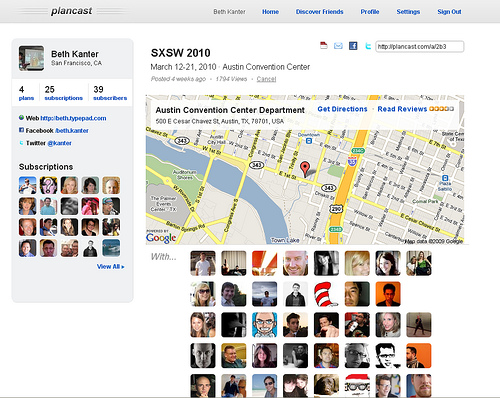
Events:  The best part of the conference is the evening events.  This was one of the most challenging aspects of the conference as there many events occurring at the same time and some were much better than others.  Some of the hyped parties, had very long lines to get into, which was not fun at all.  I tried finding events that were not as hyped up.  There are great people everywhere, so you don’t have to go to the “hot” party to have good networking.  Finding the right parties take some preparation, so I would recommend talking to your contacts and creating a game plan before each evening, otherwise it is overwhelming (use Plancast to make life easier).  If you just want to hang out with people you already know, then there is not much advance planning needed as you can find a lot of bars to hang out and listen to music, dance, play games, chill out, etc.  The best evening event for me was the First Round Capital bus trip to Salt Lick, a famous BBQ joint outside of Austin.  Everyone on the bus seemed to be of high-caliber and met several new people that I will be following up with.  Luckily I was able to get an invite to the bus trip as I ran into Rob Hayes (a Partner at First Round) the night before and he invited me, so was very fortunate.

Planning:  Several weeks ahead of time, figure out who is going and who you want to spend time with.  I would suggest going with a friend as it is not too fun to hang out on your own, although you can meet people everywhere.  I didn’t go to SXSW with anyone in particular, but I knew a lot of people who were attending and made plans to hang out with them several days before arriving.  I would suggest making plans at least a few before the trip as people to book their dinner/lunch/breakfast plans well a head of time.

technology/Tools: I would recommend several mobile applications to make your experience much better: Foursquare, Gowalla, Plancast, Yelp, TripIt, Echofon, Bump, Evernote.  I used Foursquare, Plancast and Echofon the most and all severed as way to coordinate which events to attend based on where your contacts are currently located or places they plan to go to.  People were using both Foursquare and Gowalla to “check-in” but next year, we need to have a mobile application that aggregates all the “check-ins” so you don’t need to go back and forth on multiple applications.  Given that using a smartphone is critical for a good networking experience, you are going to run your battery down very quickly, so would suggest bringing a charger with you at all times and even an extra battery pack, which are available as add-ons.

Length of Stay: Two days during the Interactive portion of SXSW was sufficient for me.  Next year, I will plan two days for the Interactive portion, but would like to stay an additional two days for the Music portion of SXSW. I spoke to several people were at SXSW for three, four, five days and most said they were pretty exhausted.  Attending the conference for two days allowed me to have sufficient energy to go to many events without being worn down, which can make you less efficient.

VCs and Angels and Incubators: I wasn’t sure how many investors would be attending, but I ran into or saw many firms/individuals: Accel, First Round, CMEA, Sierra, Canaan, Benchmark, Bessemer, Shasta, Emergence, Founders Fund, SV Angel, Baseline, Dave McClure, Chris Sacca, Dan Martell, Dharmesh Shah, Alsop Louie, DFJ, Norwest, Rembrandt, Techstars, YCombinator, CapitalFactory, Bootup Labs, Venture Hacks.  A lot of them tend to hang out with each other, so the trick is finding a few of them and then you will meet some of their buddies who are also investors.  There were also several events that were VC sponsored, I already mentioned First Round and Canaan Partners had a good event as well.

Tight budget: find other people who are attending SXSW and split the cost of a local hotel that is walking distance to the convention center, that way you don’t spend money on taxis.  You can easily have four people to a room and you are not going to spend much time in your hotel, so no need to get your own bed, bring a sleeping bag and crash on the floor.  If you are on a tight budget, you don’t necessarily need to buy a pass for SXSW as I found that the most of networking opportunities takes place away outside the conference.  You can hang out in the lobby of the Hilton, hang out near the convention entrance and attend a lot of the parties as many of them don’t require a badge.  A lot of the parties that require a conference badge, provided free food and drinks, so it is certainly worth to get a pass solely for this purpose. I can’t speak to the content of the entire conference as I only attended two panel sessions and one keynote address, so I only spend a total of three hours at the actual conference.  There were not any major takeaways from the content sessions that I attended, but I’m sure there were some great sessions that were worthwhile.  I didn’t buy a pass this year as I wasn’t planning on attending any of the sessions, as I was focusing on getting work (emails/calls) done during the day and networking in the evening.  Fortunately, a contact of mine who was only there for a few days was leaving the day I arrived and allowed me to use their badge.  Next year, I will buy a pass and spend more time attending the content portion of the conference and will have a better perspective on the quality of the content.  Lastly, book you airfare well in advance as the flights get taken quickly and prices go up as you get close to the event date.  If you plan correctly, you can spend less than $750 (airfare, food, and lodging) for a meaningful SXSW experience.

Is the iPad a game changer?

So, I’m writing this blog post while flying on Virgin Atlantic, going to London for a week.  Given that I’m flying from San Francisco, it is going to take 10 hours to reach my destination, so I was thinking of how I was going to keep myself busy, especially since there is no wifi access on my flight.  The answer was to read for most of the time, so I went into one of the stores in the airport and bought 4 magazines to keep me occupied.  I spent at least $20 on these magazines (unlike Sara Palin, I will list what I read 🙂 Fortune, GQ, The Economist, Entrepreneur).  I started reading an interesting article by Fortune called “The Future of Reading” (Josh Quittner, March 2010), talking about how and if, the tablet, specifically the iPad will change journalism.

In the Fortune article, Marc Andreessen, a well-known entrepreneur and investor is quoted “…to think tablets will essentially be the new newspaper or the new book or the new magazine, and that all the economic for the newspapers, magazines, and books will carry forward on the tablet, is really dangerous.”  To a certain degree, I disagree with him and believe the tablet is a step in becoming the new form of consuming books/magazines.  There are several startups (Nanolumens) that are creating really cool flexible/bendable screens and I suspect that in a few years will enable tablets to have a flexible screens, which will bring it one step close to feeling like a magazine.

I’m not an Apple fan boy, but in our household, we have at least 5 Apple devices….maybe I’m an Apple nut, but I really wouldn’t describe myself as one (Steve Jobs in not my god).  In any case, I’ve been thinking about the Apple iPad that is coming out in March/April 2010 and whether it is a device that will be a “game changer”.  For the last few weeks, I’ve down played the importance of the iPad, but as I spend more time thinking about it, I’m starting to realize that is going to be a huge disruption for several reasons.

While there are several readers (Kindle) and many other tablets in the marketplace, none of them have had the proper mix of features to really take off.  Here is what I’m looking for as a consumer in regards to a digital reader or tablet:

1) has to be affordable, needs to be in the $300 range

2) has to be very light, equal to the weight of several magazines or books

3) needs to be able to download magazines and books via wifi

4) actual battery life needs to be at least 12+ hours, preferably 24+ hours

5) touch screen with full color is must

6) purchasing the content needs to be one-click, so my financial info (credit card) needs to be stored

So with those parameters, the Apple iPad is the closest device to fulfilling my needs.  My concern with the iPad is battery life (10 hours) and the cost (starts at $499).  Once I see the iPad in person and speak with several people who own the device, I will make a decision as to whether I buy it or not.

I do believe the iPad will change the market for book/magazine publishers, here is why:

1) the Apple App Store already has many consumers credit card information and allows them do buy digital media instantly.  This is a critical point, as destination sites have a lot of difficulty building trust with consumers regarding their credit card information

2) the App Store doesn’t control the market of supply and demand, meaning that consumer and publishers will decide what the value of content should be.  I just spent $20 on magazines that I will likely throw away at the end of the trip, even though I could benefit from referring back to the content from time to time.  I would prefer to spend $20 on content that I can access at any time.  In addition, the publishers can continue to have a good margin, as there are no printing costs or retail marks ups.  Sure, the App Store will get their piece of the pie, but could be win-win for publishers and Apple

3) the combination of touch screen and HD quality screen, will allow the iPad to closely resemble the physical action of flipping through a magazine of book.  This is an area that the Kindle has not addressed yet.

4) advertising will be in full color and will be very interactive.  If you are a smart advertiser, you know that many magazine publishers currently inflate subscription numbers and there is zero visibility into how many readers are actually looking at your ad.  The iPad will provide the analytics that smart advertisers are looking for

Some of the counter arguments that I’ve heard are:

1) If the iPad is connected to the web, where a lot of content is free, why would I pay for it?  The answer is simple I believe, if the application (app) that is created closely resembles the look and feel of a magazine, consumers will pay for it.  If you haven’t seen what the Sports Illustrated would look like on the iPad check this video out.

2) Why do I want to carry another device?  The point is addressed with one of the comment above; if the product is light, people will carry them, especially when traveling.  The Kindle has shown that consumers will carry another device.  The other related question is battery life and the Kindle does a great job with this as a charge can last a week.  The battery life for the iPad is a big question mark for me as well.

Would love to hear your comments and thoughts on this.  Twitter: @shaig

RIM/Blackberry Killer?

There are many conversations taking place, questioning whether the Google Android Operating System (OS) will be an Apple iPhone killer.  My belief is that iPhone will continue to have the best hardware devices for the next few years  and they will always have one of the best devices in the market.  I think the company that is in biggest jeopardy with the influx of Android devices is RIM (Blackberry) and that the Android will begin taking a lot of U.S. market share from Blackberry.  There are a few reasons why this will take place.

1) Google enterprise applications are getting a lot of traction with large, mid and small enterprises.   The momentum of Google’s relationship with enterprises will allow them to have a direct channel to sell their Android devices, specifically the Nexus One.   Side note: The Nexus One is a 1st generation phone and future versions will provide additional features which will allow them to be in favor with enterprises.  I suspect that future models of the Nexus One will have a physical keyboard, a must have for many enterprise workers.  HTC, who manufactures the Nexus One, has several phones that have a physical keyboard and have touchscreen functionality.

2) The Blackberry App Store is relatively small with 2K applications.  Compare that to the iPhone which has 150K apps and Android with 25K apps.  The Blackberry device is not suitable for heavy usage, primarily due to the form factor of device, screen size, and lack of touch screen functionality.  The Blackberry does a great job for simple tasks such as email and calendar access, but many enterprise workers don’t use much of the other functions on the Blackberry.  I predict that the enterprise workers will demand access to more applications and additional hardware features that Blackberry doesn’t do well.  The lack of Blackberry’s success with their app store, provides an opportunity for Android to step in and become the destination for enterprise mobile applications.

3) IT managers have been reluctant to try the new smartphones for the enterprise.  Blackberry has had a long relationship with IT managers, as the Blackberry has been in existence for 10+ years and the IT managers are used to working with these devices.  It will take several years for Google to build a relationship and trust with IT managers.  Part of the challenge is that IT managers don’t get comfortable with 1st/2nd generations phones where there are still some bugs to be fixed.  Remember, the IT mangers want to reduce the amount of time they spend fixing things, so their perspective is that the Blackberry work fine, so why switch.   IT managers need to have remote access to the devices, something that both Apple and Android are lacking, but are working on providing.  There has also been some security questions as to whether the newer smartphone devices are safe for enterprises.  There are several mobile security startups that will assist IT managers with security issues, such as Lookout and EnMoDa.

Blackberry has 36M subscribers, so they are certainly the leader for enterprise smartphones, but in 2011 I see Google Android OS smartphone getting a large adoption by enterprise IT managers.  I found an article indicating that Gartner predicts the Android will be #2 player in global smartphones by 2012, so this supports my prediction to a certain degree.  Yes, I know that I left out several major mobile players such as MS Windows Mobile, Palm, Symbian/Nokia.  The iPhone is a great consumer device and will get limited traction with large enterprises.

As of now I think it is two-horse race to win the market share of enterprise workers with Blackberry and Android; in the long-term Android wins!

2009: A Great Year For Sequoia Capital

Every year, there are only a limited number of Venture Capital (VC) firms that do very well.  In 2009, Sequoia Capital had a tremendous year in terms of total capital returned to their LPs (Limited Partners) aka Investors.  They had five exits of significant value (one IPO, four acquisitions).  Given that Sequoia Capital is an early stage VC firm, I am assuming they had at least 15% ownership in the following companies. 

  • Company Name – amount of exit – round of investment – date of initial investment
  • AdMob – acquired by Google for $750M – Series A investor – 09/2006
  • Jajah – acquired by Telefonica for $200M – Series A investor – 03/2006
  • A123 – IPO  – raised $380M – $2.3B market cap as of 12/28/2009 – Series A investor – 11/2005
  • Zappos – acquired by Amazon for $1.2B – growth stage round – 10/2004
  • Pure Digital – acquired by Cisco for $590M – growth stage round – 5/2007

In total, $3.12B was generated via these five exits.  Assuming Sequoia had 15% ownership that is $590M generated to their LPs.   These returns will likely be attributed to two Sequoia funds (both are U.S. focused): $445M fund XII that was raised in 2006. and $395M fund XI that was raised in 2003, so $840M raised via both funds.  So with five investments, Sequoia was able to return 70% of these two funds.  In addition to these five investments, there are several other Sequoia portfolio companies that are likely to have significant exits including: CafePress, LinkedIn, Kayak, Meebo, Sugar, RockYou, Stardoll, etc.  It is highly likely that Sequoia Capital will be able to provide a 2X return to their LPs for both funds.  This is very noteworthy as many funds that were raised in 2003 and 2006 will likely return less than 2X of the funds raised to their LPs.

Other firms that had a good 2009 in terms of significant exits include: Accel Partners (SpringSource, Admob, Playfish) and Benchmark Capital (SpringSource, Pure Digital, Mint, FriendFeed).  Do you agree with Sequoia Capital having the best year or is there another VC firm that you think had a better year?

All of the above mentioned information was sourced though various publicly accessable websites and articles including:

www.crunchbase.com

www.silicontap.com

http://calacanis.com/2009/12/21/according-to-venturewire-sequoia-capital-commands-2-5-management-fee-and-30-carry-impressive-well-earned/

http://www.accessmylibrary.com/article-1G1-107042246/cautiously-optimistic-vc-fund.html

http://www.redherring.com/Home/14294

http://vator.tv/news/show/2009-12-22-sequoia-raising-1-billion-umbrella-fund

http://www.slideshare.net/eldon/sequoia-capital-on-startups-and-the-economic-downturn-presentation

2009: Top Moments in VC / Tech

Given that we are just about at year-end, I wanted to provide a recap of some of the most memorable moments that took place in the venture capital and technology ecosystem.  Below is a list of  the 10 most important events:

First VC backed technology IPO –  OpenTable goes public at $20/share on May 21st http://www.techcrunch.com/2009/05/21/opentable-has-a-healthy-ipo-shares-shoot-up-40-percent-market-cap-hits-600-million/

First VC backed acquisition (above $500M) – Pure Digital acquired by Cisco for $590M – http://gigaom.com/2009/03/19/cisco-to-buy-pure-digital-for-590m/

First VC backed cleantech IPO – A123 goes public at $17/share on September 23rd http://seekingalpha.com/article/160794-a123-s-ipo-could-open-the-floodgates-for-greentech-sector


Khosla Ventures raises $1.1B – in 2009 most VC funds were shrinking in size, yet Khosla Ventures was able to raise $1.1B, this event was a sign that Limited Partners (L.P.s) we actively seeking investment opportunities in the VC sector – September 1st

http://www.nytimes.com/2009/09/01/business/01khosla.html


Tesla Motors receives $465M from the D.O.E – First technology company to receive a loan guaranty – June 23rd http://www.techcrunch.com/2009/06/23/the-government-comes-through-for-tesla-with-a-465-million-loan-for-its-electric-sedan/


Twitter raises a $100M VC round of financing – at a time when there are questions about the consumer internet sector, this funding provided some positive support that $ can be made in the sector – September 25th

http://gigaom.com/2009/09/26/why-investing-100m-in-twitter-isnt-crazy/


NASDAQ closes above 2,000 – August 3rd- the previous time NASDAQ was above 2,000 was September 30, 2008

http://www.marketwatch.com/story/tech-rally-pushes-nasdaq-to-close-above-2000-2009-08-03


Dow Jones Industrial Average closes above 10,000 – October 14th – the previous time the Dow was above 10,000 was October 2, 2008

http://www.nytimes.com/2009/10/15/business/15markets.html


Apple App Store gets more that 100,000 applications published – November 4th – as you may recall the App Store launched on July 10, 2008 and the creation of the iPhone and App Store has created opportunities for both VCs and Startups to make $$

http://www.apple.com/pr/library/2009/11/04appstore.html


Facebook Connect is widely adopted by 60M users and 80K sites – the utilization of Facebook Connect has allowed startup companies a way to reduce the time / effort for their users to sign up for a particular service

 http://digital.venturebeat.com/2009/12/09/le-web-facebook-connect-now-has-60-million-users-on-80000-sites/


Other memorable moments which didn’t make my top 10:


Canopy Financial is accused of stealing money from investors – December 10th – this serves as a good reminder that investors need to spend more time on diligence and remember their fiduciary responsibilities

http://www.pehub.com/57905/canopy-financial-execs-accused-of-stealing-from-clients/


legislation that might change the way Carried Interest is taxed

http://www.pehub.com/58106/memo-to-congress-there-are-legal-issues-with-taxing-carried-interest-as-ordinary-income/


Adoption of the Android Platform

http://www.pocketgamer.co.uk/r/Android/Google+Phone/feature.asp?c=17312


Did I miss any major moments or events? Let me know your thoughts.

Upward Momentum

This week was likely the best for the venture/tech industry in 2009.   I believe this week  (and month) will be marked as a turnaround point as there have been a number of very positive events, which I hope will create some much needed momentum in the industry.

1) Amazon acquired venture backed company, Zappos, for ~$900M.  A great win for their investors, most noteably Sequoia Capital.  Large companies, such as Amazon, typically wait till the market is at the bottom, before acquiring companies, as they are targeting the lowest possible valuation; this signals an important inflection point in the market.

2) 3.5% increase in the stock market in a single week, DOW above 9,093 (high since Nov ’08) and NASDAQ at 1,664 (high since Nov’ 08).  Part of the increase in the stock market, was the positive earnings announcement from Apple; their iPhone product line is growing very rapidly, which is  also helping fuel the companies (some of which are VC backed) who sell their applications in the iTunes AppStore.

3) Several growth stage venture backed companies received follow on rounds of financings, which were led by new investors.  The point that these financings are being led by new investors is critical, as most follow on financings in 2009 have been done by existing investors (aka “inside rounds”).   I can’t recall a week this year with as many new follow on financings as this past week.  The fact that new investors are putting money in to venture backed companies is a sign that things are changing for the better.  Below is a partial list of existing venture backed companies that raised money this week from new investors:

  • eMeter – raised$32M, led by Sequoia Capital
  • Ning – raised $15M from Lightspeed Venture Partners, rumors are the valuation was $750M!!!
  • Kontera – raised $15.5M, led by Sequoia Capital
  • iControl, raised $23M, led by ADT Security Services, Cisco, Comcast Interactive Capital and GE Security
  • 5min – raised $5M, led by Globespan Capital Partners
  • SlideRocket, raised $5M, led by Azure Capital

4) Several reports, such as VentureSource and MoneyTree, have released data this week on the level of venture investments in Q2.  All the data points are indicating that Q1 investments have been surpassed by Q2 investments.  Based on conversations I’m having with the VCs and the volume/pace of VC financings I’m observing, I project that Q3 venture investments will be larger that Q2

5) Lastly, several VC firms have raised new funds this week.  This is significant, as there have been many articles and conversations indicating that the VC business is at risk.  The fact that these firms, specifically, Matrix and Khosla, is a sign the Limited Partners (LPs, those that invested VC funds) continue to believe in the VC business model.

  • Matrix Partners, $600M for two funds, $450M main fund and $150M special opportunity fund
  • Kholsa Ventures, $1B for two funds, $250M early stage and $750M late stage
  • DFJ, closed on $196M of a targeted $400M fund

Note: the data in this post in all publicly available and was mainly sourced via:  Silicontap.com, Techcrunch.com, Venturebeat.com, Yahoo.com

A Presentation Template for Pitching Investors

I recently presented at a SDForum event called “Crafting a Fundable Roadmap“, which included 40+ entrepreneurs and was held in San Francisco.  My presentation was about creating a presentation that is suited for meetings with potential investors.  While there a lot of resources available for creating the “right” pitch presentation, I have my own thoughts as to what should and shouldn’t be included in an initial meeting with an investor.   Given that I meet with hundreds of entrepreneurs a year, I have a sense of what works within a presentation.  The content that I provided is descriptive, so need to summarize that, but wanted to provide a few key takeaways.

  1. More slides does not mean you have a better business, 12 slides in more than enough for an initial presentation
  2. Do not have more than four bullet points (not sentences) in each slide and don’t read the bullet points to the investor (they can read) elaborate/expand on each bullet point
  3. Use visuals when appropriate (customer logos, demo/screen shots,  competitive landscape graphs/charts, financial charts) – no need to flying visuals or complex “builds’
  4. Have passion when presenting, this is your company/idea, you should be excited to present

Investor Presentation Template

The Gold Rush

It is 1849 again, only this time the movement of caravans are not traveling West, but are headed East to Washington D.C.   I’m referring to the passing of the $787B stimulus package aka American Recovery and Reinvestment
Act of 2009 that was recently signed by President Obama.

The NVCA had a conference call last week, on Tuesday 2/17/09, to describe what the effect of the stimulus package is for the VC industry and the call was certainly a positive one.  The good news for startups and VCs is that roughly 8% of the $787B is going to support initiates in the cleantech and life science sectors.  According to the NVCA, the breakdown of the allocated funding is as follows; $37B for cleantech related programs/projects, $19B for healthcare IT, and $5B for science related programs/projects.  To put these figures into perspective, according to the recent PWC/NVCA MoneyTree report, VCs invested $28B in 2008 and of that $4.6B went to energy related companies.   Another figure that put things into perspective, since 2002, VCs have invested a total of $13B in energy related companies, so the stimulus package provides the industry roughly 3X this total amount.

The stimulus package is a huge boost to both startups and VCs in the cleantech sector.  Lets focus on the $37B available for cleantech companies; those that will fair the best are ones that are currently generating revenue and/or are close to production.  In addition, the folks at the NVCA indicated that the companies that have the strongest ties to D.C/DOE will likely move to the front of the line.  Lastly, those that have the most postive impact on job creation will do well, so I suspect that companies in the solar, wind, biofuel, battery/auto, and smartgrid sectors will get most of the allocated funding.  With that in mind, a partial list of privately held venture backed companies that are heading East for some cash and will likely strike gold are (in no particular order):

Solar: BrightSource Energy, Solyndra, Solar City, NanoSolar, SolFocus, Miasole, Fat Spaniel, AVA Solar, CaliSolar, eSolar, Konarka

Battery/Auto: Better Place, A123 Systems, Tesla, Boston Power, Fisker, Deeya

Biofuels: Range Fuels, Mascoma, Amyris, Altra Biofuels, Qteros

Smartgrid: Silver Spring Networks,  Gridpoint

Wind: Northern Power, Southwest Windpower, Wasatch Wind,

Discolsure – I put together this list based on information that has already been made public and is readily available online.

The Best VCs?

I meet with a lot of entrepreneurs and the topic we tend to discuss most is fundraising.  Naturally, the entrepreneurs ask me who the best VCs are?  Well, that is very tough question to answer as there are many variables to consider when thinking about who the “best” VC is.  It could be their track record, meaning how many exits have they had and/or how much money have they made for their firms.   Other considerations are how much value they bring to their portfolio companies, how active are they at board meetings, how do they help the company succeed, how active are they in helping you raise the next round of financing, etc.  Another variable is their personality and how that matches the CEOs they work with.

Well rather than tell my personal/professional opinion of who the best VCs are, lets review a few groups that rank VCs based on their own methodologies, specifically Forbes and TheFunded.com.    Forbes provides an annual review of who the best 100 deal makers are, which includes mostly VCs; they call it the Midas List.  The 2009 Midas List was unveiled on 1/29/2009.  The other group that ranks VCs is called TheFunded.com; which ranks VCs on a weekly basis, based on what entrepreneurs think of the VCs; their most recent ranking is dated 2/9/2009 and included 99 VCs.  I’m sure there are other services/sites that rank VCs, but the two I mentioned are the most well known to me, so lets see what they say.

Both groups have different methodology of identifying who the “best” VCs are.  Essentially, Forbes, takes a look how successful these VCs have been, so they review which VCs have the largest IPOs or acquisitions of their portfolio companies, see their methodolgy here.   Given that most start ups take seven years to exit, my perspective is that these VCs are being measured on how successful they were in identifying/sourcing good investments opportunities ~7 years ago (avg time for start ups to get to an exit) and how much value they added throughout the process.  Although Fores does provide an explanation as to how they rank the VCs, I would argue that they also consider the “brand” of these particular VCs and also their popularity.  Given that most professionals in the VC/start up ecosystem expect very few large exits in 2009, it is going to be difficult to apply the Forbes methadology in ranking the best deal makers in 2009.

TheFunded essentially is looking at which VCs have the most positive reviews by entrepreneurs.  For those of you who are familiar with this site, you know that there has been a lot of questions about the validity of the postings, as they are anonymous.  In addition, they have received some negative attention from VCs, see this Techcrunch article.  However, I believe there is some validity to this site as they are beginning to get more and more entrepreneurs to rank these specific VCs.  As the sample size of entreprenuer ratings increase, they will get more positive attention on the data they present.  My opinion is that the perspective of  TheFunded provides an indication as to who is currently the best VC, which could mean that these VCs might not realize their exits (IPOs / acquisitions) in ~7 years; see the point I made earlier.  The argument could be that the highly ranked VCs on this site might get access to great investment opportunities simply because they have good feedback from entrepreneurs; founders with great ideas would gravitate to these highly ranked VCs.

The purpose of the post was not to be over analytical as to which group reviews most accurately, but to set the stage and see if there was any overlap of highly ranked VCs on both lists.  So after cross referencing both lists, there were only three VCs (suprisingly) that were on both….drum roll please…”The Best VCs” are, in no particular order, John Doerr from KPCB, Gregory Gretsch from Sigma Partners, and Pete Barris from NEA.  Congrats to these three for making both lists.

P.S. I don’t know if these investors are really the “best”, but hopefully you enjoyed the post