Tech Trends for 2012

The 2011 tech trends that stood out to me were startups addressing education, healthcare, ecommerce, distributed workforce and marketplaces.  We saw vertically focused incubators pop up.  The seed bubble and Series A crunch never materialized, despite the prognostication of VCs and bloggers.  Startups led by Women founded grew significantly.  We had a fair amount of VC backed IPOs (most haven’t performed well): Zynga, LinkedIn, Pandora, Groupon, Fusion-io, Cornerstone OnDemand, Zillow, Zipcar, Angie’s List, Jive, Demand Media.

Here is a list of newer trends I expect to see in 2012:

  1. Microsoft builds momentum with developers: Windows Phone and Kinect will draw the attention of developers
  2. Startups are going to disrupt the book and magazine industry by allowing anyone to write longer forum content without having to go through the typical route of being “approved/accepted” by traditional publishers
  3. Startups are going to focus on gaming and education applications for young children, two to six year olds
  4. Applications specifically made for enterprise workforce, mainly for those in the field
  5. We are going to see more startups addressing the security space

Despite the fact that there are a lot of incubators/accelerators and co-working facilities, we are going to see more of them come online.  Although many pundits have been predicting a seed bubble for the past two years, I don’t see the level of funding for seed rounds diminishing in 2012.  In addition, there is plenty of cash available for companies who have the product/traction and want to raise a Series A.

List of Active Series A Investors

Here is a list of active investors who invest in Series A rounds of NYC (New York) based startups: If you are looking for Seed stage investors, see this post.

This firms are currently writing checks for companies who are raising Series A rounds that range from $3M to $10M.

NYC Based (meaning they have a full time investor(s) living in NYC & you don’t have to fly to another city for a partnership meeting(s)):

  • Bain Capital Ventures
  • Bessemer
  • Bloomberg Beta
  • Canaan
  • Contour Venture Partners
  • DFJ Gotham
  • First Round Capital
  • FirstMark
  • General Catalyst
  • Greycroft
  • High Peaks Ventures
  • IA Ventures
  • Matrix
  • New York City Investment Fund (NYCIF)
  • Polaris
  • Raptor Ventures
  • Rho
  • RRE
  • RTP Partners
  • Softbank Capital
  • Spark Capital
  • Tiger Global
  • Tribeca Ventures Partners
  • Union Square Venture Partners
  • Venrock
  • Zelkova Ventures

Non-NYC Based:

  • Accel
  • Battery
  • BlueRun Ventures
  • Fairhaven Capital
  • Foundry
  • Flybridge
  • Google Ventures
  • Highland
  • Javeline Venture Partners
  • Khosla
  • KPCB
  • Lightbank
  • Lightspeed
  • Menlo Ventures
  • NEA
  • Norwest Venture Partners
  • Sequoia
  • Shasta Ventures
  • Social+Capital Partnership
  • True Ventures

The $240 Billion Opportunity

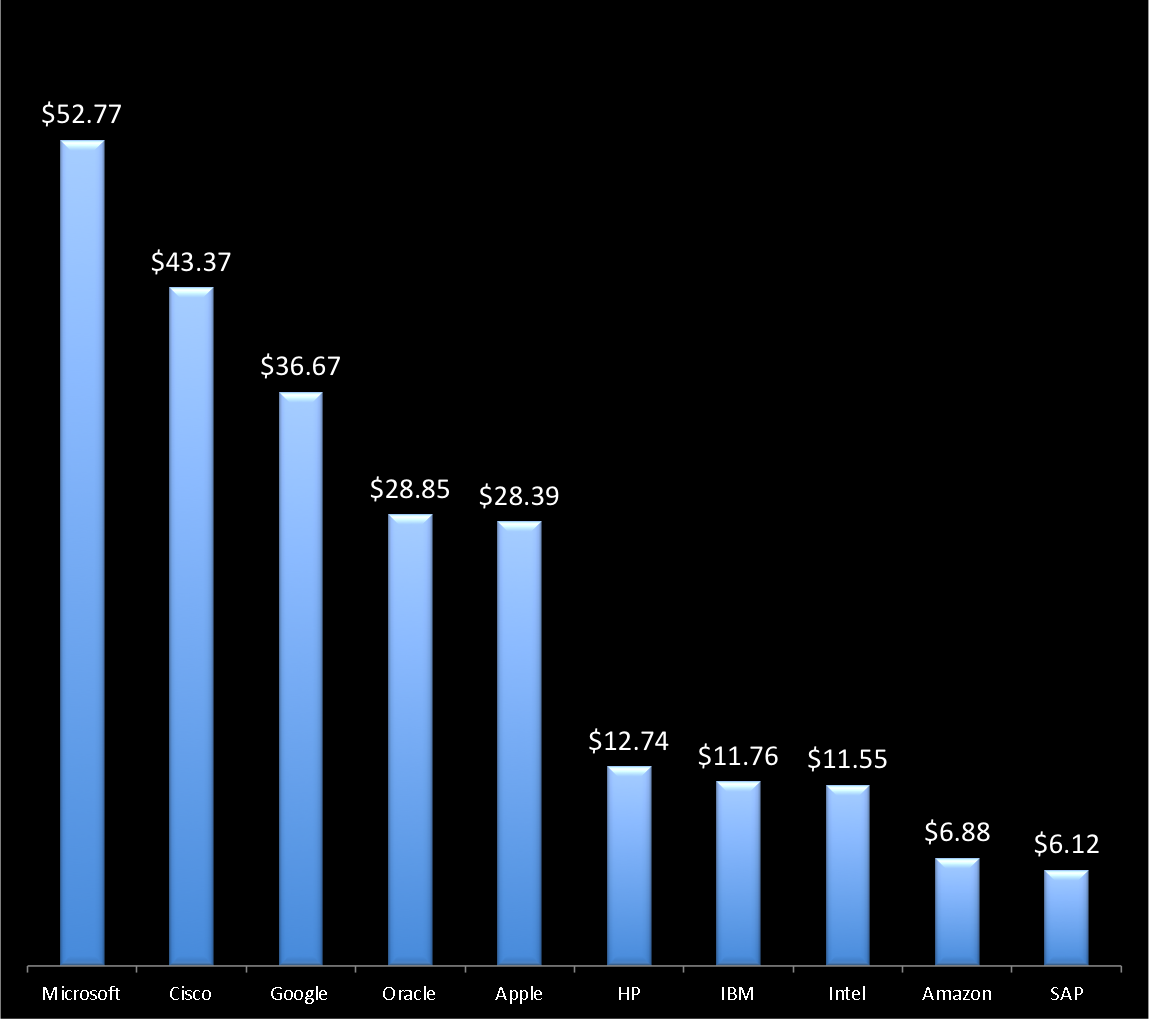
This is a great time to be a startup in the broader software sector.  The image below represents some of the largest public tech companies and the dollars figures shown is their respective cash on hand.  This cash will be primarily used to acquire private technology startups.  In total, these 10 public tech companies have $240 BILLION in cash!  Go get the money!

List of Active Seed Stage Investors

Here is a list of active investors in NYC (New York) based seed stage startups.  If you are looking for active Series A investors, see this post.

The definition of active means that the investor has made at least three new seed stage investments in a NYC startup in the last 9 months.  Some of the firms are new, so they haven’t made three investments yet but are planning on making investments.  Seed stage investment means that these investors participate in deals that are typically less that $2M in size.

New York based seed investors:

  • 500 Startups
  • Abdela, Angelo
  • Accel Partners
  • Advancit Capital
  • ARC Angels Fund
  • Betaworks
  • Black Ocean
  • BoldStart Ventures
  • Bowery Capital
  • Box Group
  • Brand Foundry
  • Brooklyn Bridge Ventures
  • Canaan Partners
  • Chart Venture Partners
  • Chertok, Doug
  • Coriolis Ventures (incubator)
  • Contour Venture Partners
  • Crossbar Capital (Charlie Federman)
  • Dace Ventures
  • Gotham Ventures
  • DreamIT Ventures (accelerator)
  • Dyson, Esther
  • ENIAC Ventures
  • ER Accelerator
  • Eskapa, Daniel
  • ff Venture Capital
  • Flybridge
  • First Round Capital
  • FirstMark Capital
  • Fogel, Avi
  • Founder Collective
  • Genacast Ventures
  • General Catalyst
  • Gilbert, Parker
  • Goldberg, Alexander (angel – Canary Ventures)
  • Golden Seeds (angel group)
  • Great Oaks Venture Capital
  • Greycroft Ventures
  • HBS Angels NY Chapter (Harvard Business School)
  • High Line Venture Partners
  • High Peak Venture Partners
  • IA Ventures
  • KayWeb Angels (equity in exchange for web development)
  • Lerer Ventures
  • LDV Capital
  • Marrus, David
  • MESA+
  • Metamorphic Ventures
  • Milestone Ventures
  • Neu Venture Capital (Jerry Neumann)
  • New York Angels (angel group)
  • New York Life Science Angels (angel group)
  • NextView Ventures
  • NYC Investment Fund
  • NYC Seed
  • NYU Innovation Venture Fund
  • Polaris Ventures
  • Quotidian Ventures
  • Red Swan Ventures
  • Richenstein, Larry
  • Rose Tech Ventures (David S. Rose)
  • RRE Ventures
  • Schneider, Mark
  • Softbank Capital
  • Spark Capital (Mo Koyfman based in NYC, firm based in Boston)
  • Techstars (accelerator)
  • Tevel Angels
  • Thrive Capital
  • Trisiras Group (Kal Vepuri)
  • Union Square Ventures
  • Upstage Ventures (Mark Wachen)
  • Urgent Ventures (Jeff Stewart)
  • Vaizra Investments (NYC/Israel)
  • Vaux les Ventures (Miles Spencer)
  • von Simson, Ernie
  • Whelan, Jon
  • Women Innovate Mobile (accelerator)
  • YavonditteMichael
  • Zelkova Ventures

Other investors active in New York seed deals (with location):

  • Battery Ventures (Boston)
  • Floodgate (Bay Area)
  • Forerunner Ventures (Los Angeles)
  • Javelin Venture Partners (Bay Area)
  • Khosla Ventures (Bay Area)
  • Launch Capital (Dave Shen, SF/Boston/New Haven)
  • Lowercase Capital (KA)
  • MentorTech Ventures (Philly)
  • New Enterprise Associates aka NEA (D.C. and Bay Area)
  • Resolute.vc (Boston)
  • SoftTech VC/Jeff Clavier (Bay Area)
  • SV Angel/Ron Conway (Bay Area)
  • True Ventures (Bay Area)

Bubble?

The blog post dejour for those in the startup community (including several VCs) is to discuss an upcoming bubble.  These folks who are mentioning the bubble are those in the software sector, which includes consumer, enterprise and infrastructure.  The cleantech, hardware, and life science sectors are not part of this conversation.

There have been two bubbles in past 10 years, both which I was a witness of.  I’m not going to go into great length describing the two bubbles as there have been plenty of articles written on the topic, but here is a quick summary.

2000-2001 : many VC backed companies did not have the proper financial basis to go IPO, research Pets.com and Webvan for details.  Essentially too much speculation.  This bubble was mainly driven by the valley, VCs, startups and I-bankers.  Rightly or wrongly, a lot of money was invested into enterprise/infrastructure for the potential Y2K bug.  This downturn was exacerbated by 9/11.  Over $100B was invested by VCs in 2000.  NASDAQ dropped from ~5,000 in March 2000 to ~1,500 in September 2001.

2007-2008:  a lot of VC backed companies were raising large Series A rounds of $6M, with not much to show in terms of customer/revenue traction.  Follow on rounds were being done at inflated valuations, $50M+. The stock market tanked, primarily driven by inflated residential real estate prices, which was enabled by loose underwriting guidelines and poorly collateralized investment vehicles.  The difference is that the 2007 market crash was not the fault of tech companies, as it was in 2000-2001.  $32B was invested by VCs in 2007 (compare that to $100B in 2000).  NASDAQ dropped from ~2,800 in October 2007 to ~1,300 in November 2008.

2011?: Folks are saying there will be crash, the problem is that they are not providing specific data points as to why they believe this is going to happen.  What I hear from VCs is “it feels like a bubble is going to happen”.  I also hear, “valuations are too high for Series A deals”.  In 2010, we are on pace for $22B to be invested by VCs (compare that to $32B in 2007 and $100B in 2000).

We are not in a bubble, here is why:

  • Stock market is already depressed, so it will not pop as it did in 2000/2001 and 2007/2008
  • Overall economy continues to be very poor (except for tech) and unemployment is very high (except for tech)
  • There is a lot less supply of VC money.  In 2000 and 2007, there was too much supply of VC dollars.  In 2007, there was roughly $35B invested and 2010 it will likely be $22B.  Many VC firms are going out of business and follow on funds are typically much smaller (ie DFJ $650M to $350M, Menlo $1.2B to $400M, and many more)
  • Angels/Micro-VCs/Super Angels in aggregate equal ~$600M, that is roughly the size of one VC fund
  • Series A/Seed rounds or initial rounds of financing are much smaller.  In 2007, there were ~$6M, now they are ~$1.5M
  • Valuation of Series A/Seed rounds are much lower, In 2007, they were $6M Pre on a $6M raise, so $12M Post.  Now they are $4M Pre on a $1.5M raise, so a $5.5M Post
  • There is a lot of money sitting on the sidelines by startup acquires such as: Apple, Google, Oracle, Amazon, Cisco, Microsoft, HP, etc.  This cash will continue to be used to acquire startup companies 2011 as these large public companies need revenue/product growth, which is what acquired startups provide.

A point of emphasis, some VCs are saying there is going to be Angel/MicroVC/Super Angel bubble.  As I mentioned previously, if you add all these dollars, it is likely to be $600M, which is less than one VC fund.  Lets do that math Floodgate ($75M), SV Angel ($20M), 500 Hats ($30M), OATV ($51M), Lowercase ($8.5M), K9 Ventures ($6M), SofttechVC ($12M), Felicis Ventures ($40M), Harrison Metal (?), Baseline (?),Y Combinator ($8.25M), TechStars ($2.5M), Founder Collective ($40M), IA Ventures ($25M), etc.  The majority of the firms I mentioned have funds, of which many were raised in the past 12 months, so they still have another 12 to 24 months of runway, as most funds are deployed within three years.  In addition to the $500M, lets add another $100M for individual angels, some of who are active on AngelList, so in total $500M + $100M = $600M in the seed/angel category.  The seed rounds also include traditional VCs (funds larger that $100M) such as Sequoia, CRV, Trinity, Redpoint, Polaris, True, Greylock, First Round, Union Square,  etc.   It is difficult to know how much money from these funds are allocated for seed rounds, but it total, I would guess it it close to an additional $500M.  In total we there is $1.1B available for seed rounds ($500M + $100M + $500M).  In the big scheme of things these seed rounds make up a very small part of total VC dollars invested, which will likely be $22B this year. 

There is certainly an argument to be made about the challenges of finding great engineering talent, but that will not result in a bubble occurring.  Yes, there are a lot of incubators that are popping up, if those fail, that will not create bubble, they would be collateral damage.

There are a lot of companies that received seed funding this year who will not be successful, but that is not a definition of a bubble.  These companies are raising much smaller rounds ($1M compared to $6M) and they are lot more capital efficient.  Only a small percentage of startups become successful, this is true now and was true 10, 20 and 30 years ago.  Yes, many of the seed funded startups will not raise a follow on round of financing.  Seed rounds are meant to allow the startup to make a go of their business and if they fail to execute, they will not get additional funding, the next round of funding is never promised in this business.  In addition, there is a great emphasis for startups to get to cash flow positive and that a revenue model must be proven.

In summary, 2011 will be a good year for startups who are raising seed rounds, there is sufficient cash available, so go get it!

Sites that provided some of the data I used for this post:

http://www.chubbybrain.com/blog/a-guide-to-super-angel-investors-who-are-they-what-do-they-invest-in/

https://www.pwcmoneytree.com

http://www.businessinsider.com/who-are-the-super-angels-a-comprehensive-guide-2010-10?slop=1

2009: A Great Year For Sequoia Capital

Every year, there are only a limited number of Venture Capital (VC) firms that do very well.  In 2009, Sequoia Capital had a tremendous year in terms of total capital returned to their LPs (Limited Partners) aka Investors.  They had five exits of significant value (one IPO, four acquisitions).  Given that Sequoia Capital is an early stage VC firm, I am assuming they had at least 15% ownership in the following companies. 

  • Company Name – amount of exit – round of investment – date of initial investment
  • AdMob – acquired by Google for $750M – Series A investor – 09/2006
  • Jajah – acquired by Telefonica for $200M – Series A investor – 03/2006
  • A123 – IPO  – raised $380M – $2.3B market cap as of 12/28/2009 – Series A investor – 11/2005
  • Zappos – acquired by Amazon for $1.2B – growth stage round – 10/2004
  • Pure Digital – acquired by Cisco for $590M – growth stage round – 5/2007

In total, $3.12B was generated via these five exits.  Assuming Sequoia had 15% ownership that is $590M generated to their LPs.   These returns will likely be attributed to two Sequoia funds (both are U.S. focused): $445M fund XII that was raised in 2006. and $395M fund XI that was raised in 2003, so $840M raised via both funds.  So with five investments, Sequoia was able to return 70% of these two funds.  In addition to these five investments, there are several other Sequoia portfolio companies that are likely to have significant exits including: CafePress, LinkedIn, Kayak, Meebo, Sugar, RockYou, Stardoll, etc.  It is highly likely that Sequoia Capital will be able to provide a 2X return to their LPs for both funds.  This is very noteworthy as many funds that were raised in 2003 and 2006 will likely return less than 2X of the funds raised to their LPs.

Other firms that had a good 2009 in terms of significant exits include: Accel Partners (SpringSource, Admob, Playfish) and Benchmark Capital (SpringSource, Pure Digital, Mint, FriendFeed).  Do you agree with Sequoia Capital having the best year or is there another VC firm that you think had a better year?

All of the above mentioned information was sourced though various publicly accessable websites and articles including:

www.crunchbase.com

www.silicontap.com

http://calacanis.com/2009/12/21/according-to-venturewire-sequoia-capital-commands-2-5-management-fee-and-30-carry-impressive-well-earned/

http://www.accessmylibrary.com/article-1G1-107042246/cautiously-optimistic-vc-fund.html

http://www.redherring.com/Home/14294

http://vator.tv/news/show/2009-12-22-sequoia-raising-1-billion-umbrella-fund

http://www.slideshare.net/eldon/sequoia-capital-on-startups-and-the-economic-downturn-presentation

2009: Top Moments in VC / Tech

Given that we are just about at year-end, I wanted to provide a recap of some of the most memorable moments that took place in the venture capital and technology ecosystem.  Below is a list of  the 10 most important events:

First VC backed technology IPO –  OpenTable goes public at $20/share on May 21st http://www.techcrunch.com/2009/05/21/opentable-has-a-healthy-ipo-shares-shoot-up-40-percent-market-cap-hits-600-million/

First VC backed acquisition (above $500M) – Pure Digital acquired by Cisco for $590M – http://gigaom.com/2009/03/19/cisco-to-buy-pure-digital-for-590m/

First VC backed cleantech IPO – A123 goes public at $17/share on September 23rd http://seekingalpha.com/article/160794-a123-s-ipo-could-open-the-floodgates-for-greentech-sector


Khosla Ventures raises $1.1B – in 2009 most VC funds were shrinking in size, yet Khosla Ventures was able to raise $1.1B, this event was a sign that Limited Partners (L.P.s) we actively seeking investment opportunities in the VC sector – September 1st

http://www.nytimes.com/2009/09/01/business/01khosla.html


Tesla Motors receives $465M from the D.O.E – First technology company to receive a loan guaranty – June 23rd http://www.techcrunch.com/2009/06/23/the-government-comes-through-for-tesla-with-a-465-million-loan-for-its-electric-sedan/


Twitter raises a $100M VC round of financing – at a time when there are questions about the consumer internet sector, this funding provided some positive support that $ can be made in the sector – September 25th

http://gigaom.com/2009/09/26/why-investing-100m-in-twitter-isnt-crazy/


NASDAQ closes above 2,000 – August 3rd- the previous time NASDAQ was above 2,000 was September 30, 2008

http://www.marketwatch.com/story/tech-rally-pushes-nasdaq-to-close-above-2000-2009-08-03


Dow Jones Industrial Average closes above 10,000 – October 14th – the previous time the Dow was above 10,000 was October 2, 2008

http://www.nytimes.com/2009/10/15/business/15markets.html


Apple App Store gets more that 100,000 applications published – November 4th – as you may recall the App Store launched on July 10, 2008 and the creation of the iPhone and App Store has created opportunities for both VCs and Startups to make $$

http://www.apple.com/pr/library/2009/11/04appstore.html


Facebook Connect is widely adopted by 60M users and 80K sites – the utilization of Facebook Connect has allowed startup companies a way to reduce the time / effort for their users to sign up for a particular service

 http://digital.venturebeat.com/2009/12/09/le-web-facebook-connect-now-has-60-million-users-on-80000-sites/


Other memorable moments which didn’t make my top 10:


Canopy Financial is accused of stealing money from investors – December 10th – this serves as a good reminder that investors need to spend more time on diligence and remember their fiduciary responsibilities

http://www.pehub.com/57905/canopy-financial-execs-accused-of-stealing-from-clients/


legislation that might change the way Carried Interest is taxed

http://www.pehub.com/58106/memo-to-congress-there-are-legal-issues-with-taxing-carried-interest-as-ordinary-income/


Adoption of the Android Platform

http://www.pocketgamer.co.uk/r/Android/Google+Phone/feature.asp?c=17312


Did I miss any major moments or events? Let me know your thoughts.

Upward Momentum

This week was likely the best for the venture/tech industry in 2009.   I believe this week  (and month) will be marked as a turnaround point as there have been a number of very positive events, which I hope will create some much needed momentum in the industry.

1) Amazon acquired venture backed company, Zappos, for ~$900M.  A great win for their investors, most noteably Sequoia Capital.  Large companies, such as Amazon, typically wait till the market is at the bottom, before acquiring companies, as they are targeting the lowest possible valuation; this signals an important inflection point in the market.

2) 3.5% increase in the stock market in a single week, DOW above 9,093 (high since Nov ’08) and NASDAQ at 1,664 (high since Nov’ 08).  Part of the increase in the stock market, was the positive earnings announcement from Apple; their iPhone product line is growing very rapidly, which is  also helping fuel the companies (some of which are VC backed) who sell their applications in the iTunes AppStore.

3) Several growth stage venture backed companies received follow on rounds of financings, which were led by new investors.  The point that these financings are being led by new investors is critical, as most follow on financings in 2009 have been done by existing investors (aka “inside rounds”).   I can’t recall a week this year with as many new follow on financings as this past week.  The fact that new investors are putting money in to venture backed companies is a sign that things are changing for the better.  Below is a partial list of existing venture backed companies that raised money this week from new investors:

  • eMeter – raised$32M, led by Sequoia Capital
  • Ning – raised $15M from Lightspeed Venture Partners, rumors are the valuation was $750M!!!
  • Kontera – raised $15.5M, led by Sequoia Capital
  • iControl, raised $23M, led by ADT Security Services, Cisco, Comcast Interactive Capital and GE Security
  • 5min – raised $5M, led by Globespan Capital Partners
  • SlideRocket, raised $5M, led by Azure Capital

4) Several reports, such as VentureSource and MoneyTree, have released data this week on the level of venture investments in Q2.  All the data points are indicating that Q1 investments have been surpassed by Q2 investments.  Based on conversations I’m having with the VCs and the volume/pace of VC financings I’m observing, I project that Q3 venture investments will be larger that Q2

5) Lastly, several VC firms have raised new funds this week.  This is significant, as there have been many articles and conversations indicating that the VC business is at risk.  The fact that these firms, specifically, Matrix and Khosla, is a sign the Limited Partners (LPs, those that invested VC funds) continue to believe in the VC business model.

  • Matrix Partners, $600M for two funds, $450M main fund and $150M special opportunity fund
  • Kholsa Ventures, $1B for two funds, $250M early stage and $750M late stage
  • DFJ, closed on $196M of a targeted $400M fund

Note: the data in this post in all publicly available and was mainly sourced via:  Silicontap.com, Techcrunch.com, Venturebeat.com, Yahoo.com

A Presentation Template for Pitching Investors

I recently presented at a SDForum event called “Crafting a Fundable Roadmap“, which included 40+ entrepreneurs and was held in San Francisco.  My presentation was about creating a presentation that is suited for meetings with potential investors.  While there a lot of resources available for creating the “right” pitch presentation, I have my own thoughts as to what should and shouldn’t be included in an initial meeting with an investor.   Given that I meet with hundreds of entrepreneurs a year, I have a sense of what works within a presentation.  The content that I provided is descriptive, so need to summarize that, but wanted to provide a few key takeaways.

  1. More slides does not mean you have a better business, 12 slides in more than enough for an initial presentation
  2. Do not have more than four bullet points (not sentences) in each slide and don’t read the bullet points to the investor (they can read) elaborate/expand on each bullet point
  3. Use visuals when appropriate (customer logos, demo/screen shots,  competitive landscape graphs/charts, financial charts) – no need to flying visuals or complex “builds’
  4. Have passion when presenting, this is your company/idea, you should be excited to present

Investor Presentation Template

The Gold Rush

It is 1849 again, only this time the movement of caravans are not traveling West, but are headed East to Washington D.C.   I’m referring to the passing of the $787B stimulus package aka American Recovery and Reinvestment
Act of 2009 that was recently signed by President Obama.

The NVCA had a conference call last week, on Tuesday 2/17/09, to describe what the effect of the stimulus package is for the VC industry and the call was certainly a positive one.  The good news for startups and VCs is that roughly 8% of the $787B is going to support initiates in the cleantech and life science sectors.  According to the NVCA, the breakdown of the allocated funding is as follows; $37B for cleantech related programs/projects, $19B for healthcare IT, and $5B for science related programs/projects.  To put these figures into perspective, according to the recent PWC/NVCA MoneyTree report, VCs invested $28B in 2008 and of that $4.6B went to energy related companies.   Another figure that put things into perspective, since 2002, VCs have invested a total of $13B in energy related companies, so the stimulus package provides the industry roughly 3X this total amount.

The stimulus package is a huge boost to both startups and VCs in the cleantech sector.  Lets focus on the $37B available for cleantech companies; those that will fair the best are ones that are currently generating revenue and/or are close to production.  In addition, the folks at the NVCA indicated that the companies that have the strongest ties to D.C/DOE will likely move to the front of the line.  Lastly, those that have the most postive impact on job creation will do well, so I suspect that companies in the solar, wind, biofuel, battery/auto, and smartgrid sectors will get most of the allocated funding.  With that in mind, a partial list of privately held venture backed companies that are heading East for some cash and will likely strike gold are (in no particular order):

Solar: BrightSource Energy, Solyndra, Solar City, NanoSolar, SolFocus, Miasole, Fat Spaniel, AVA Solar, CaliSolar, eSolar, Konarka

Battery/Auto: Better Place, A123 Systems, Tesla, Boston Power, Fisker, Deeya

Biofuels: Range Fuels, Mascoma, Amyris, Altra Biofuels, Qteros

Smartgrid: Silver Spring Networks,  Gridpoint

Wind: Northern Power, Southwest Windpower, Wasatch Wind,

Discolsure – I put together this list based on information that has already been made public and is readily available online.